New evaluation report: widening access to banking and finance
New evaluation report for The Sutton Trust is launched: Pathways to Progress
A report on widening access to banking and finance
4 March 2026
A new Bridge Group study, commissioned by The Sutton Trust, evaluates the medium to long-term impact of its flagship Pathways to Banking and Finance programme. While the research highlights the programme's success in building student confidence, facilitating informed choice and opening doors, it also identifies persistent systemic barriers that require collective action from the sector.
Vathany Vijayaratna, Chief Executive Officer, UK & Ireland, Deutsche Bank, said:
“We believe that talent should never be limited by circumstance. That’s why we remain deeply committed to opening doors and breaking down barriers for talented students from diverse backgrounds across the UK. We want them to understand the breadth of opportunities that are open to them within banking and finance and through that we aim to help shape a financial sector that truly reflects the richness of our society.”
Jenny Baskerville, Chief Executive of the Bridge Group, said:
“The Sutton Trust and its university and employer partners should be commended for the positive impact of the Pathways to Banking and Finance programme on students' choices and early careers. However, our findings also serve as a call to action for the sector to formalise the link between outreach and recruitment efforts, expand regional opportunities, and ensure greater attention is paid to getting on as much as getting in.”
The research involved a quantitative survey of 138 programme alumni and qualitative interviews with 20 alumni and five representatives from partner employers, including the Bank of England, Deutsche Bank, and PwC.
Key findings from the research:
A springboard to the sector: Almost 70% of programme alumni are either working in a finance-related sector or intending to pursue a finance-related career.
Building confidence and belonging: Participants reported significant gains in professional communication, networking skills, and the resilience needed to navigate elite corporate environments.
The power of work placements: Alumni view work experience as the most critical element of the programme, acting as a "springboard" to further internships and graduate roles.
Persistent "information asymmetry": Despite the programme’s success, students from lower socio-economic backgrounds (SEB) still face a gap in "informal knowledge", such as interview strategies and professional norms, that privileged peers often inherit through family networks.
The "Double Disadvantage": Barriers to belonging are often compounded for those from a lower SEB who are also from ethnic minority backgrounds, highlighting the need for intersectional approaches to inclusion.
Recommendations for the sector:
The report outlines several key recommendations to advance socio-economic diversity and inclusion within banking and finance:
Expand regional reach: While the programme has a strong presence in London, there is a clear demand for more workplace experiences and opportunities in other UK regions to support "staying local".
Formalise work experience: Firms should move away from informal, "who you know" recruitment channels and replace them with structured, publicly advertised, and paid programmes.
Strengthen the alumni "nudge": Outreach providers should offer more proactive "check-ins" and support during the critical transition between university and early career steps.
Support beyond entry: Inclusion efforts must extend past the point of recruitment. Firms are encouraged to implement structured sponsorship, mentorship, and data-led reviews of how work is allocated to ensure everyone can thrive.
Celebrating the Pathways to Banking and Finance programme
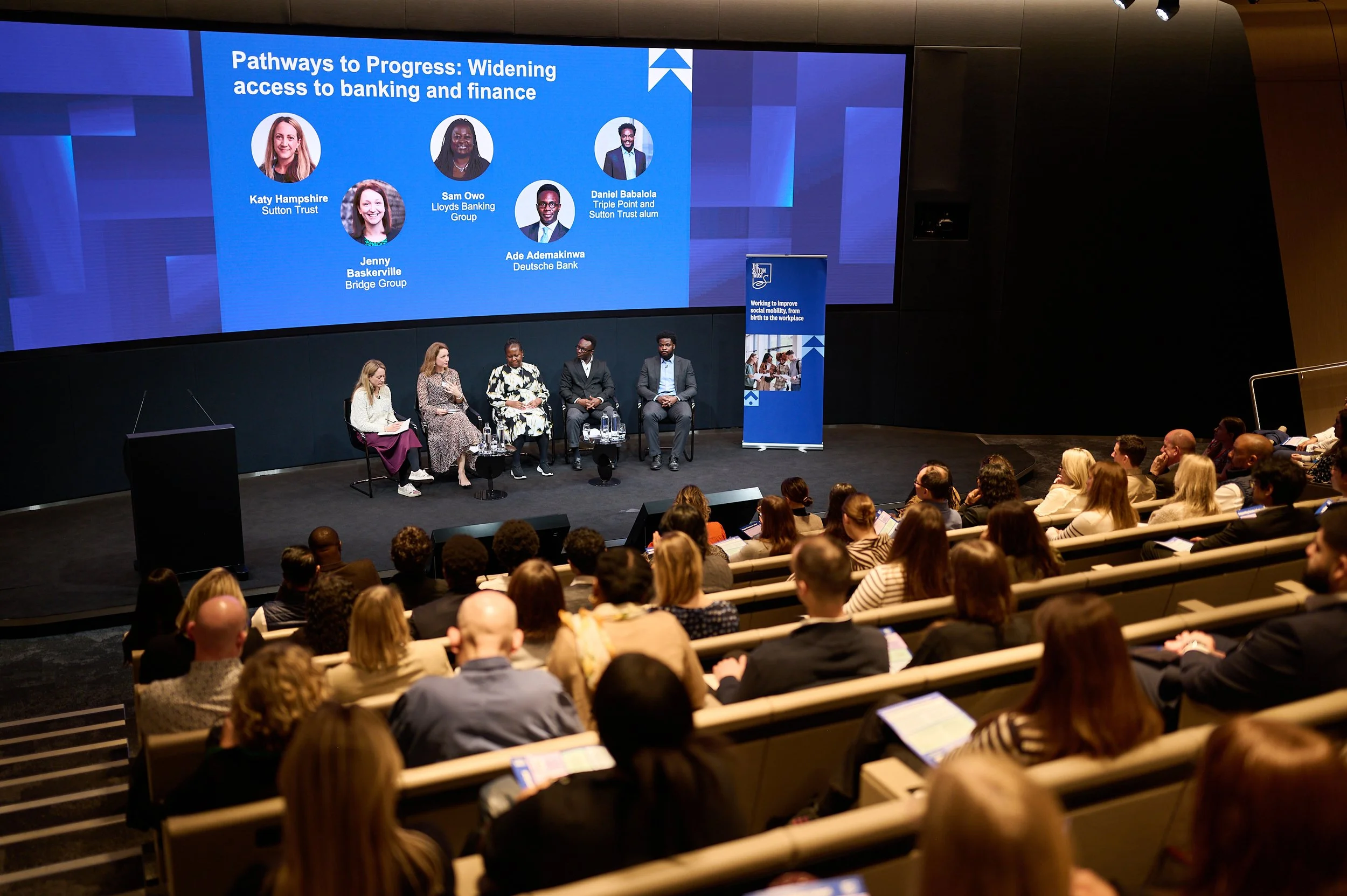
On 3 March, banking and finance professionals, social mobility leaders and Pathways to Banking and Finance alumni gathered at Deutsche Bank to celebrate the programme and the launch of the Pathways to Progress report. An expert panel discussed the challenges and shared recommendations for how the banking and finance sector can drive positive practice and capitalise on the diverse talent across the UK.
Below you can see a selection of photographs from the breakfast event.